
Warehouse Research
The Warehouse and Logistics Systems Group conducts research primarily focused on logistics warehouses, with the aim of improving work efficiency and on-site operations. By leveraging real-world data obtained from cameras, smartphones, and various sensors, we work on understanding and visualizing work conditions, analyzing operational processes, and optimizing workflows. We also place strong emphasis on building systems that can be practically deployed in real-world environments, and we are advancing research on warehouse support technologies that integrate recognition, localization, and optimization techniques.
Recognizing Work and Objects through In-Warehouse Image Recognition
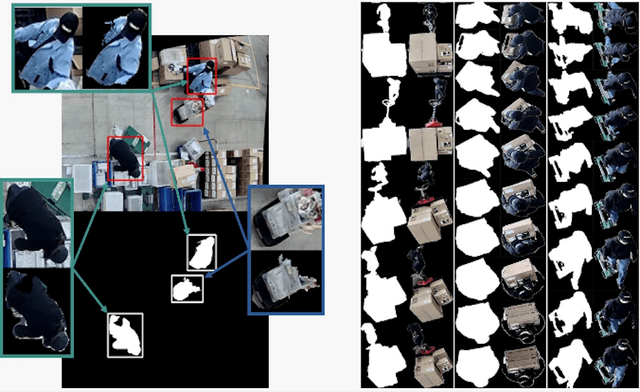
We conduct research on recognizing and tracking workers and packages using video footage from multiple fixed cameras installed within logistics warehouses. By applying deep-learning-based human and object detection and tracking techniques, we capture work conditions and movement paths within the warehouse. These image recognition technologies enable visualization and analysis of work processes, with the goal of improving operational efficiency and on-site workflows.
Optimization of Warehouse Operations Using Quantum Annealing
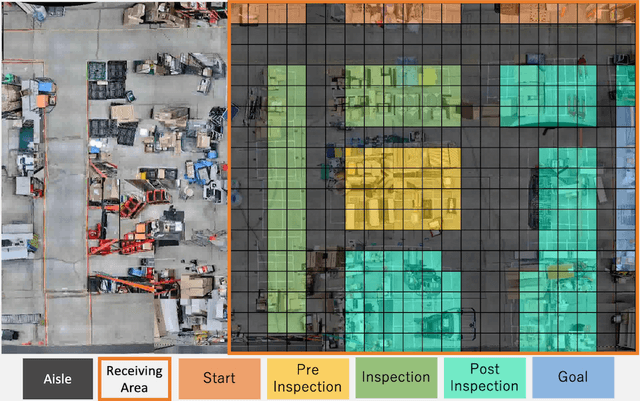
In this research, we work on optimizing warehouse layouts and task assignments using Ising machines that enable the evaluation of optimization problems for quantum annealing. Quantum annealing is a computational approach specialized for combinatorial optimization problems, and we consider it a suitable method for improving the efficiency of warehouse operations. By optimizing task placement and role assignments within warehouses, we aim to contribute to increased productivity and operational improvements.
Indoor Localization in Warehouses Using Multiple Sensors
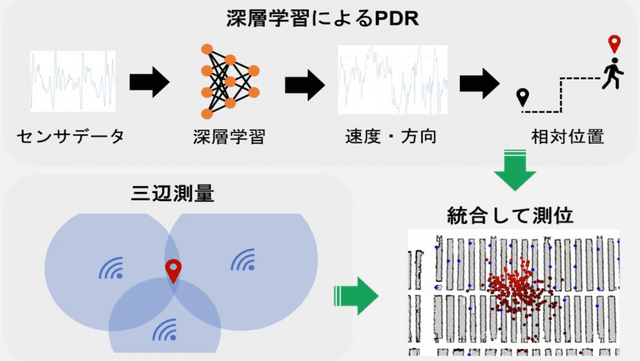
We conduct research on indoor localization in warehouses using multiple sensors, including smartphones and wireless sensors. By combining PDR (Pedestrian Dead Reckoning) with trilateration, we aim to build a practical indoor positioning system capable of estimating workers’ locations. Understanding workers’ positions within warehouses enables visualization of work conditions and operational analysis, supporting applications that improve productivity.
Warehouse Work Recognition Using Smartphones
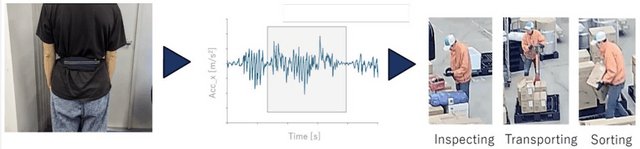
We study the recognition of warehouse tasks using accelerometer and gyroscope sensors embedded in smartphones. Sensor data are analyzed using deep learning models to estimate workers’ motions and task activities. Through automatic identification of work activities and visualization of operational processes, we aim to improve efficiency and optimize on-site warehouse operations.